Introducing Mi Campus
A knowledge activation engine for institutions that train people to do things: capsules, evidence, reinforcement and verifiable certificates
Today we are opening Mi Campus to institutions.
Mi Campus is a knowledge activation engine. It is not a learning management system and it is not a marketplace of video courses. It is a place where short, practical training is built out of capsules, and every capsule ends in a challenge that produces evidence of what a person can actually do.
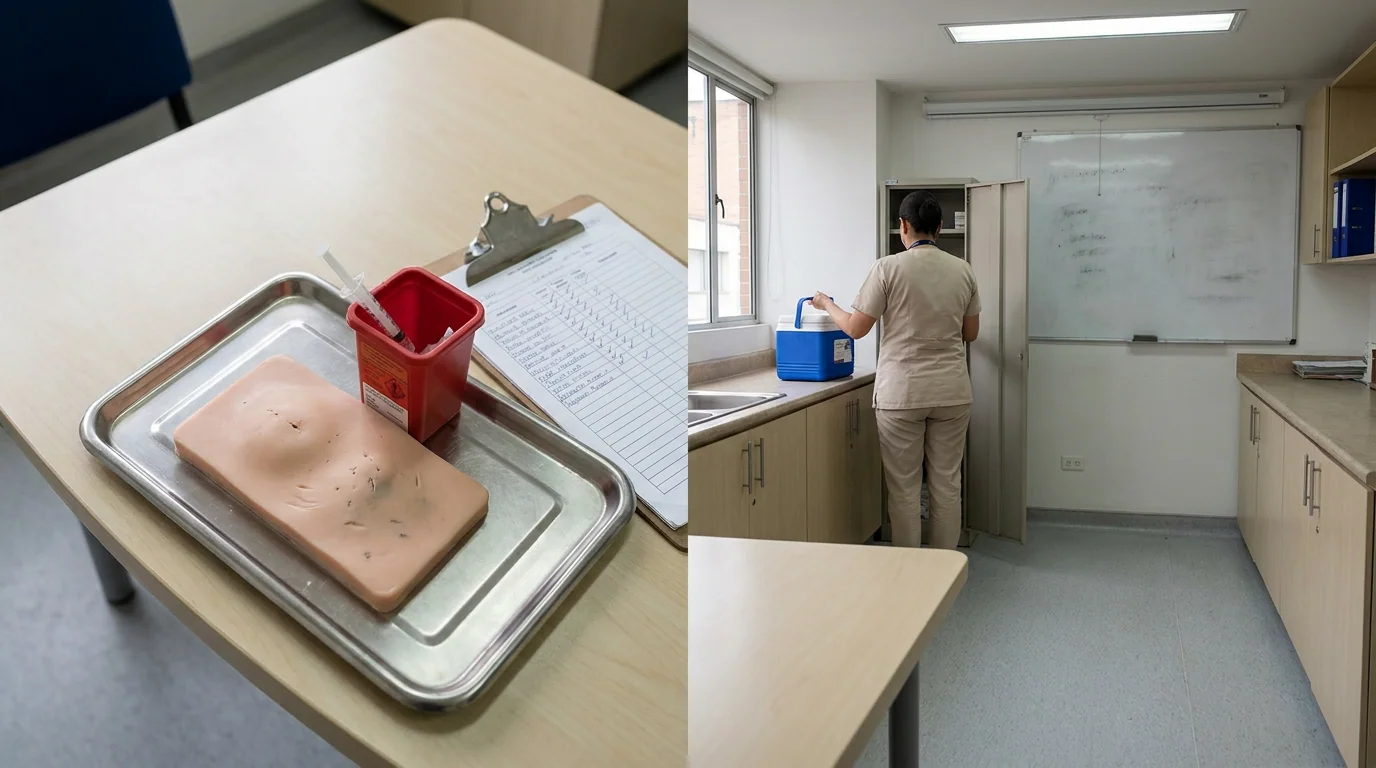
We started building it in 2021 with Emcodesa, a health-sector short-course provider. The requirement was the same from the first course to the last: people had to leave able to perform a procedure correctly, and the institution had to be able to prove it. A video completion percentage never answered that question. Mi Campus was designed to answer it.
Who it is for
Mi Campus is for institutions that run short, practical training where competency matters more than attendance:
- Health-sector training providers: injectology, vaccination, clinical records, regulatory updates.
- Public-sector bodies that need staff to apply procedures the same way every time.
- Companies that onboard teams and recertify them on operational protocols.
- Curated academies and content creators who publish under quality standards, inside an institution or as an academy of their own.
If your goal is that people can perform a task and you need to show that they can, Mi Campus was built for you. If your goal is to distribute videos, there are simpler tools for that.
How training is built: capsules and paths
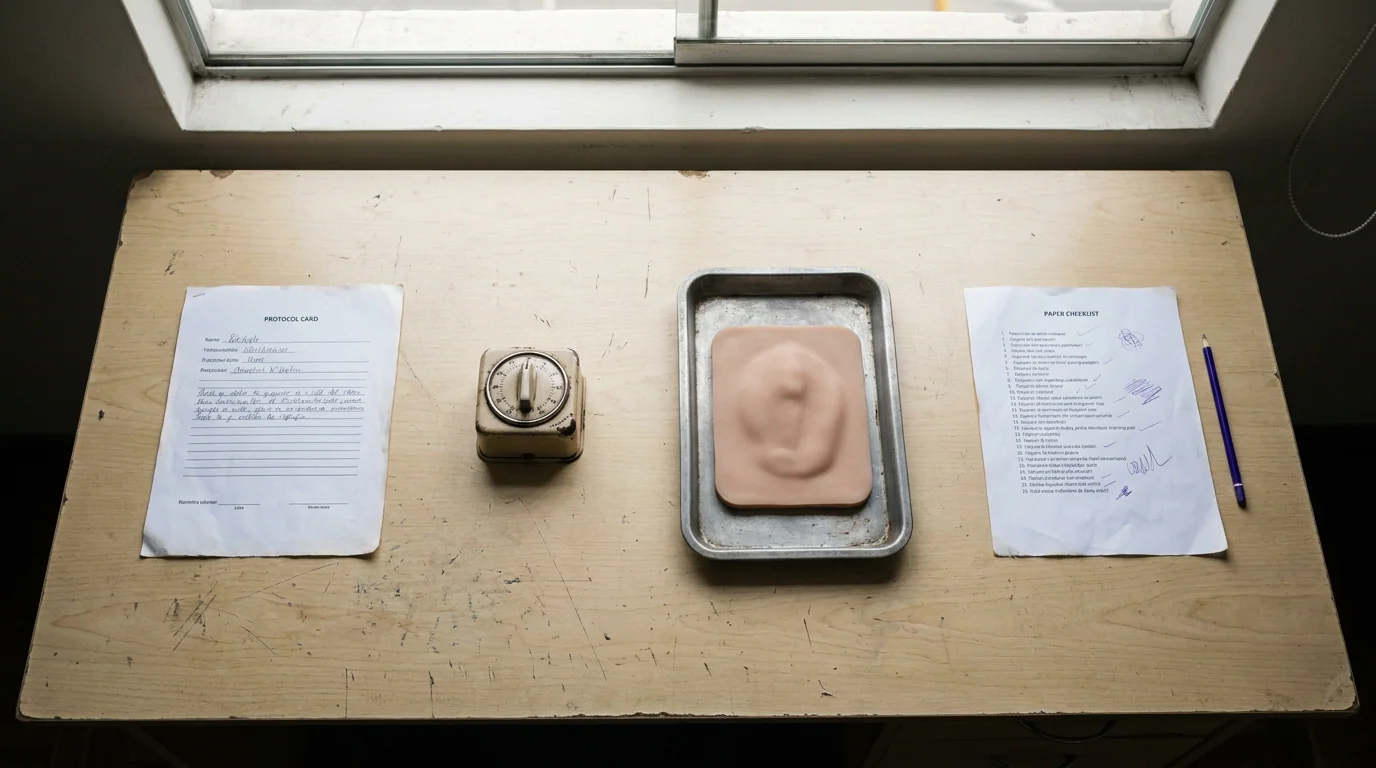
The unit of Mi Campus is the capsule. A capsule has three parts that cannot be separated: a lesson, an activation challenge, and the competency evidence the challenge produces. The lesson gives only what is needed to solve the challenge. The challenge makes the learner use it. The outcome is recorded.
Challenges come in five types: a case to analyze, a decision to make, a submission to deliver, a checklist to complete, and a quick assessment. Each one is configured by the institution with a rubric, passing criteria, a maximum number of attempts and an optional time limit. Whether a learner passes is decided by those criteria, which your team sets. No algorithm decides for you.
Capsules are organized into paths. A path can carry prerequisites, so a learner cannot open a capsule until the ones before it are completed. Every capsule shows its state plainly: not started, in progress, completed, needs reinforcement, or locked.
Reinforcement, certificates and your own brand
Capsules come in two kinds: core and reinforcement. Core capsules are the mandatory backbone of a program. Reinforcement capsules stay out of view until a learner’s results reveal a specific gap. When that happens, the right reinforcement capsule is prescribed to that learner. Two people in the same program will often not complete the same set of capsules, because they do not make the same mistakes.
The Reinforcement Hub gives your team the full picture: capsules completed, activations achieved, activation rate, time spent, error patterns ranked from low to critical, and a competency map that shows what each learner has mastered, has in progress or still has pending.
When a learner completes a program, Mi Campus issues a certificate with a public link. Anyone who receives it can open the link and confirm that it is genuine and what exactly it certifies.
On the professional plan, your institution runs under its own name, logo and colors. Your team reviews admissions and enrollment requests, and you can keep courses private for the people you admit.
Built on StoneOS, and where to start
Mi Campus is one of nine platforms of StoneOS, the Blackwood Stone operating layer. Three layers are shared by all nine: identity, events and standards. Identity is handled by Veripass, so a learner or instructor signs in once and keeps the same identity across Blackwood platforms. Events are recorded by Vectry, so every activation belongs to a history that can be inspected. Institutions can also enable the Sommatic AI Command Center, an assistant that helps people find their way and act inside the platform. It assists. It does not grade challenges and it does not replace the instructor.
Mi Campus is a complete product on its own. The shared layers are there when you need them.
There is a free plan to build your first program and run it with real learners. The professional plan adds white-label, admissions and private courses. Create your institution on the free plan, build one capsule with a real challenge, and compare the evidence it leaves with the view count you have today.